
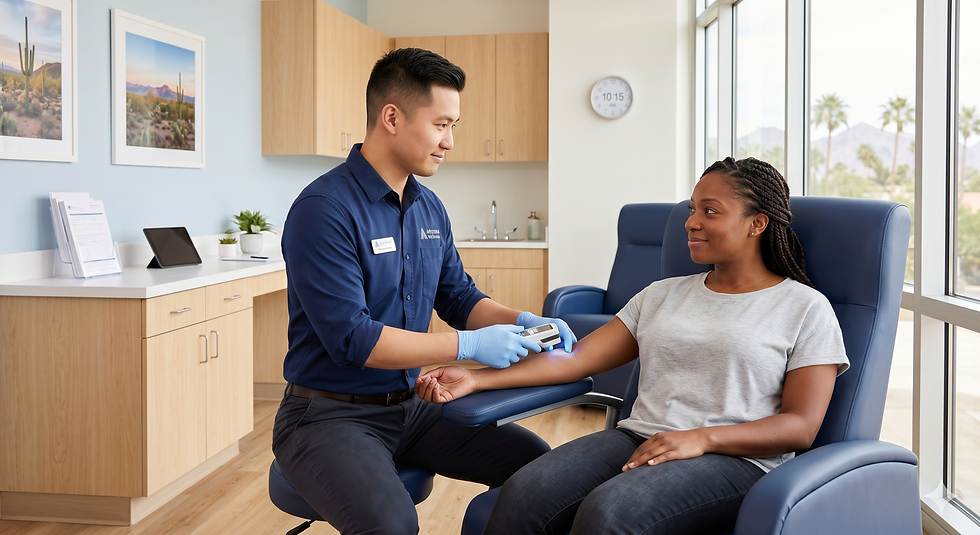
Therapeutic phlebotomy in Tucson at Quick Test is a physician-ordered blood removal that lowers excess iron or red blood cell counts — bring your order and recent labs to our St. Mary's Road lab, and we handle the draw by appointment.
How Your Appointment Works
Doctor's Order Required · Recent Lab Work Required
Email or fax your doctor's order
We Schedule your appointment
Phlebotomy Session
What's Required Before Your Appointment
Therapeutic phlebotomy is a prescribed medical treatment, so two items are required before we can book you:
-
A current physician's order: It must list your diagnosis, the volume to remove, how often, and your target hemoglobin or hematocrit.
-
Recent bloodwork: Drawn within 48 hours of your session, so we can confirm it's safe to proceed.
This service is by appointment only
What Is the Costs
Therapeutic phlebotomy is $100 per session, paid at your appointment. That covers your total visit — no insurance billing, no separate facility fee, no surprise charges. If your provider has you on a recurring schedule, the price stays the same every visit.
What Therapeutic Phlebotomy Treats
Therapeutic phlebotomy is a prescribed treatment that draws off a measured volume of blood to bring down iron stores or red blood cell levels. Your prescribing provider sets the volume and the frequency. Each session follows that protocol exactly.
These are the conditions we most often see scheduled in Tucson:
-
Hereditary hemochromatosis — The body stores too much dietary iron. Scheduled draws keep ferritin in a safe range and help protect the liver, heart, and joints.
-
Polycythemia vera — Overproduction of red blood cells thickens the blood. Regular sessions help keep hematocrit at the target your hematologist sets.
-
Secondary polycythemia — Elevated red cell counts tied to lung, kidney, sleep, or altitude factors. Draws ease from symptoms while treating the underlying cause.
-
High hematocrit on TRT — Testosterone therapy can drive red cell counts up. Scheduled phlebotomy lowers them so men can stay on their protocol.
-
Porphyria cutanea tarda — Managed under specialist care, with periodic draws as part of the treatment plan.
What to Expect at Our Location
Most patients are in and out in well under an hour, and the visit is calm by design.
Here is exactly how your appointment goes, start to finish.
Check-in is simple. We verified your order and bloodwork when we scheduled your appointment, so there's nothing to sort out at the front desk. You can sign in, and we will bring you straight back.
We begin with your vitals. Before anything else, we check your blood pressure and pulse and confirm you're ready to proceed that day. It takes a minute, and it's how we keep every session safe.
The draw runs about 15 to 20 minutes. We remove only the volume your physician prescribed—usually one unit
, roughly 450 to 500 mL, and never more than your order calls for. A member of our team stays at your side the entire time.
You rest before you leave. When the draw is finished, you sit for a few minutes while we ensure you're steady on your feet. Water and a light snack are available, and no one rushes you toward the door.
Here's how to set yourself up for an easy session:
-
The day of your appointment — Hydrate well and eat a solid meal beforehand. Never arrive on an empty stomach; it's the most common reason people feel lightheaded during a draw.
-
Right afterward — Keep your fluids up and take it easy. Skip heavy lifting and hard workouts for the rest of the day.
-
The next day, most patients feel completely back to normal within 24 hours and return to their usual routine.

FAQ
Does insurance cover therapeutic phlebotomy? We do not bill insurance for this service. If you'd like to pursue reimbursement, ask us for an itemized receipt; you can submit it to your insurance plan or pay with HSA or FSA funds. Whether it's reimbursed depends on your specific coverage.
Why do I need a doctor's order? Because therapeutic phlebotomy is a treatment, not a screening test. Removing a full unit of blood changes your iron or red blood cell levels, so it has to be matched to a diagnosis and to the targets your prescribing provider sets. The order tells us exactly how much to remove and how often, which is what keeps the treatment safe and effective. A licensed provider has to direct that care — it isn't something we can set on our own.
What paperwork do I need to send before you can book me? Two things: a current order from your prescribing provider and lab results drawn within the last 48 hours. The order should list your diagnosis, the volume to remove, how often, and your target hemoglobin or hematocrit. Email or fax both and we'll set your appointment.